
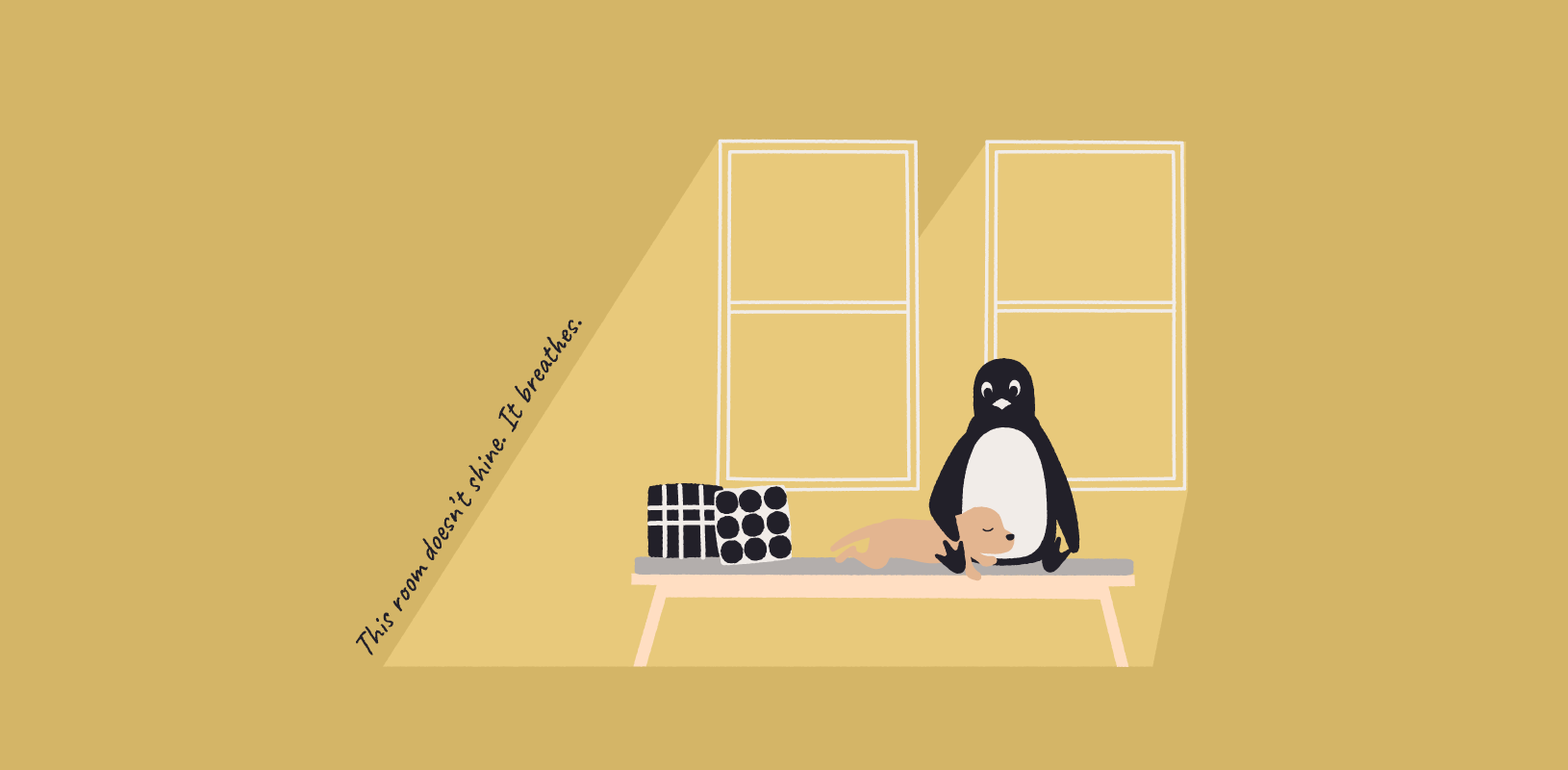
Light doesn’t just brighten a room.
It sculpts it.
陽の光は、ただ部屋を明るくするだけじゃない。
壁の凹凸や天井の角度、家具の輪郭。
家のすべての「表情」を、光が描いている。
We didn’t ask “how tall should the window be?”
We asked, “Where do we want the light to land?”
家づくりで最初に考えたのは、
「窓をどれくらい大きくするか?」じゃなかった。
「光がどこに落ちてくれると気持ちいいか?」だった。
In our old rental, the living room barely got any sunlight—
north-facing and always dim.
But in the west-facing bedroom,
the light poured in around noon and softened by 4PM.
We noticed how it traveled.
We started watching.
当時の築古の賃貸は、北向きのリビングで、
ほとんど一日中、光が入らなかった。
でも、西向きの寝室には、昼ごろから光が入り、
午後4時にはやわらかくなっていた。
その光の移動を、私たちはずっと見ていた。
We weren’t measuring lux.
We were following lines—
how light moves, bends, and stays.
ルクスや明るさを測ってたんじゃない。
光の“線”を追っていた。
どこから入って、どこで止まるか。
どう部屋を変えるか。
We paid attention not only to the direction of sunlight, but its timing.
設計のときに考えたのは、「どこから光が入るか」だけじゃなかった。
「いつ」「どんな角度で」入るかも、大事だった。
Morning light from the east,
Winter’s midday beams that reach the ceiling,
Evening shadows cast across the western wall.
朝は東の窓から差し込む淡い光。
冬の昼には天井まで届くような強い光。
夕方には西側の壁にうつる、ふたりの影。
Shadows became part of our layout.
We left certain spaces empty—
just to let light stretch out in the morning.
朝の光がまっすぐに伸びるダイニング。
そこにあえて何も置かないスペースを残した。
Even the lighting at night followed this rhythm.
We adjusted the height of fixtures
so we could enjoy the gradient of indirect light.
夜に間接照明が作る“光のグラデーション”を楽しめるように、
照明器具の高さも調整した。
So when we designed our home,
we didn’t start with the window’s size.
We started with the light’s rhythm.
家を建てるとき、
「窓の大きさ」から始めなかった。
始まりは、“光のリズム”だった。
At what time should the light hit the floor?
Which wall should glow in the morning?
Where should the shadow fall in the afternoon?
朝は、どの壁が明るいと嬉しい?
午後は、影がどこに落ちると落ち着く?
時間帯ごとに、光と影の役割を想像した。
A home with beautiful light doesn’t have to be big. Just thoughtful.
広さじゃなくて、光が動く余白があること。
それが、家に“表情”を与えてくれる。
We weren’t just designing space.
We were designing rhythm.
The rhythm of time, of light, of life.
「空間」をつくっていたんじゃない。
「時間の中の空気」をつくっていたんだと思う。
光と影、そして暮らしのリズム。
Tags :
コメントを残す